Best Lash Lift Kit: What Professionals Should Actually Buy in 2026
A professional buying guide to the best lash lift kit: reducing chemistry, kit composition, shields and rods, processing brackets by hair texture, patch testing, compliance, aftercare and yield per box. Written for technicians choosing their first system or restocking an established column.
Sophie Hartley
31 August 2026
London-based makeup artist and beauty writer. 8 years across bridal and commercial sectors. BABTAC-affiliated.
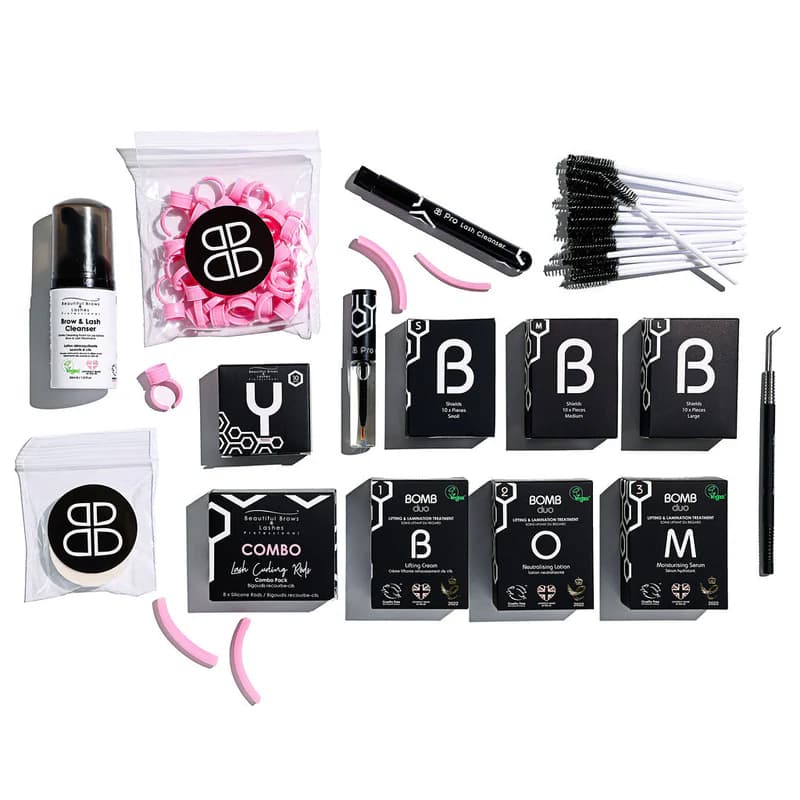
The best lash lift kit is the one whose reducing chemistry matches the hair in front of you, whose processing times are published by hair texture, and whose sachet dosing removes guesswork between clients.
The best lash lift kit is the one whose reducing chemistry matches the hair in front of you, whose processing times are published by hair texture, and whose sachet dosing removes guesswork between clients. Two actives cover the whole client book: ethanolamine thioglycolate at pH 9 to 9.5 for healthy, coarse, resistant hair, and cysteamine hydrochloride at pH 7.5 to 8.5 for fine, tinted or compromised hair. Everything else follows from tooling and discipline: a full range of silicone shields and lash rods, a bonding adhesive with controlled flow, single-use applicators, a patch test documented 48 to 72 hours ahead, and nightly aftercare to protect the 6 to 8 week hold. Judge kits on cost per client, not sticker price.
If you are new to the treatment itself rather than to buying for it, start with our complete lash lift guide for 2026, which covers the protocol from the client's side of the chair.
What separates a professional kit from a consumer kit
A lash lift is a chemical service performed 2 millimetres from the cornea. That single fact explains why a professional lash lift kit and a drugstore box share a name and nothing else. The professional kit ships each solution in single-use sachets so the active never oxidises between clients, publishes a pose time for every hair texture, includes an SDS for every chemical component, and states professional use only on the label. The consumer box ships one multi-use bottle, one time, one instruction sheet.
The clinical literature is blunt about the stakes. Dermatologists have documented allergic contact dermatitis from lash lifting solutions in patients simultaneously sensitised to glyceryl monothioglycolate, para-phenylenediamine from lash tint and multiple acrylates from lash adhesives, a triple-allergen pattern reported in the British Journal of Dermatology. The Cleveland Clinic frames the same risk for the public and insists on a test patch and a certified technician before any lift. A kit that supports that standard is a professional tool. A kit that ignores it is a liability with packaging.
Beauty press now repeats the professional line rather than contradicting it. Vogue's own round-up of lash lift kits leads with the instruction to patch test every product in the box, especially the perming solution. That is the floor, not the ceiling.
Which lash lift kit should I buy first?
Buy the smallest complete system, not the largest discount. A complete system means step 1, step 2, step 3, a bonding adhesive, a full size range of shields and rods, isolation and combing tools, eye pads and a cleanser. The BOMB Duo Lash Lift Trial Pack covers exactly that scope for ten services, which is enough volume to build muscle memory before committing to bulk stock. Technicians who intend to sell brow lamination in the same chair should step up to the Duo Lash & Brow Beginners Trial Kit, which adds the cleansing, taping and brow-definition tools the double service needs.
The active decides everything: thioglycolate or cysteamine
Human keratin owes its shape to cystine, which represents 10 to 18 percent of the protein and holds the fibre together through disulfide bonds. Every lash lift works the same way: a reducing agent breaks those bonds, the silicone shield holds the fibre in a new position, and the neutralizer reforms the bonds around that new geometry. The choice of reducing agent changes the speed, the odour, the margin for error and the client who can safely sit in your chair.
| Criterion | Ethanolamine thioglycolate | Cysteamine hydrochloride |
|---|---|---|
| pH | 9.0 to 9.5 | 7.5 to 8.5 |
| Kinetics | Fast, decisive bond breaking, opens the cuticle aggressively | Progressive penetration, lower alkaline stress |
| Margin for error | Narrow, unforgiving past the bracket | Wider, gentler on the cuticle |
| Odour | Sulfur note | Odour-free |
| Ideal hair | Healthy, thick, coarse, resistant, virgin | Fine, sparse, over-plucked, tinted, chemically treated, fragile |
| Typical step 1 pose time | 3 to 8 minutes by texture | 5 to 15 minutes by texture |
Both columns come from the brand's own technical comparison of the two actives.
Ethanolamine thioglycolate is preferred over ammonium thioglycolate in eye-area work because it is more stable, less volatile and gentler around the eye. Cysteamine is a cysteine derivative, which is why it reads as a repair-adjacent chemistry rather than a stripping one. The K-Bomb Step 1 Lifting Cream builds on that base with a copper peptide complex and the flavonoids quercetin and fisetin, processes for 7 to 15 minutes and holds for 6 to 8 weeks.
London Scene
Both lines are formulated in the UK and share the same step 2. A London column can therefore run two actives on one neutralising protocol and one training standard, which is why stocking both actives from a single supplier works out cheaper than owning two unrelated brands.
Is thioglycolate safe to use near my eyes?
Thioglycolic acid and its salts are regulated, not banned, and the regulation is where safety lives. The European Commission's Scientific Committee on Consumer Safety records the Annex III restriction under Regulation 1223/2009: up to 8 percent for general use and 11 percent for professional use in hair products, in both cases at pH 7 to 9.5. Health Canada has since applied the same 11 percent ceiling and pH 9.5 limit to eyelash curling products, added mandatory professional-use and eye-contact warnings, and prohibited thioglycolic acid esters such as glyceryl thioglycolate and isooctyl thioglycolate outright because of long-term sensitisation.
Read that as a purchasing rule. Pure thioglycolate salts inside the concentration and pH window are a professional standard. Esters in the INCI list are a reason to leave the kit on the shelf, and the ester family is exactly the one flagged in the dermatology case series cited above.
Which formula suits fine or previously tinted lashes?
Tinted, over-plucked or chemically treated hair has already lost cuticle integrity, so the alkaline load of a pH 9.5 lotion is the wrong tool. Cysteamine at pH 7.5 to 8.5 penetrates progressively and takes longer, which is a feature rather than a delay: the technician watches the shape develop instead of racing a timer. Fine brows process in 5 to 6 minutes on cysteamine against 3 to 4 minutes on thioglycolate, and that extra window is where beginners stop over-processing clients.
Pro Tip
A reaction to one active does not clear a client for the other. Each active requires its own patch test, documented separately.
What a complete kit ships
Ten items carry the service. Everything else is comfort.
| Item | Function | Where it sits in the kit |
|---|---|---|
| Step 1 lifting cream | Breaks disulfide bonds, softens the fibre for reshaping | Step 1 collection, ten 1.5 ml sachets per box |
| Step 2 neutralizing cream | Stops the reduction and rebuilds bonds in the new shape | Step 2 collection |
| Step 3 moisturizing serum | Restores moisture, releases lashes from the shield, protects retention | Step 3 collection |
| Bonding adhesive | Anchors lashes to the shield without migrating to skin | Pro Bonding Adhesive |
| Silicone shields and rods | Impose the geometry of the lift | Shields and rods collection |
| Isolating and combing tools | Separate lashes into an even formation | Eyelash isolating tool, Y-comb applicator |
| Under-eye pads or micropore tape | Protect lower lashes and thin under-eye skin | Silicone under-eye pads, micropore tape |
| Oil-free cleanser | Degreases before treatment, removes residue after | Lash & Brow Cleanser |
| Disposable applicators | Precision application and dry removal | Micro brush applicators, mascara wands |
| Optional tint and developer | Adds visible density in the same appointment | Lash and brow tinting kits |
Manufacturer supply audits reach the same list, and the ingredient logic behind each solution is worth knowing: cocoa butter, biotin and vitamin B3 in the lifting step, panthenol, hyaluronic acid and horsetail extract in the neutralizer, and panthenol, hyaluronic acid, marshmallow extract and aloe vera in the moisturizing step.
What comes in a lash lift starter kit?
A genuine starter kit closes the loop from consultation to retail. The Duo Lash & Brow Beginners Trial Kit ships one box each of step 1, step 2 and step 3 at ten sachets per box, a professional bonding serum, five pairs each of small, medium and large lash shields, a pair of combo rods, an eyelash separating tool, Y-combs, 25 mascara wands, micropore tape, a 30 ml lash cleanser and brush, 25 glue rings, a brow definer brush, five under-eye gel patches and a box of silicone palettes. That inventory is the benchmark to compare any competing kit against, item by item. The full range sits in the Beautiful Brows & Lashes collection of lash lift kits.
Shields, rods and the geometry of lift
Product chemistry sets the possibility. Tooling sets the result. Silicone shields sit flat along the lid and drive lift at the root, reading as an L shape that opens the eye and suits hooded lids, skin laxity, deep-set eyes and lashes that grow straight down. Lash rods are cylindrical, the lash is adhered around the curve, and the outcome is a rounded C or D curl that reads more natural on short lashes, mature clients and anyone who dislikes a dramatic finish. Curl intensity rises with shield size, which is why sizing is a clinical decision rather than a preference.
| Tool | Effect | Best for |
|---|---|---|
| BOMB Duo Lash Lift Shields | Root lift, L shape | Hooded eyes, straight lashes, dramatic finish |
| BB Silicone Curling Rods | Rounded C curl | Short lashes, natural finish, sensitive clients |
| Ultimate Curlers | C or D curl, no adhesive on the back of the shield | Faster placement, eight pairs from S to XL1 |
| M Lifters | High flat hybrid, dramatic lift | Beginners, all eye shapes, six pairs S to L1 |
| Korean Flat Shield | Straight uniform hold for cysteamine protocols | K-Bomb Korean-style lifts |
| Korean Crown Shields | Even lift with full visibility during processing | Precision work, hypoallergenic silicone |
Are shields or rods better for my client?
Neither wins as a category. The pairing wins. Read the lid first: coverage over the lash line, lash length, growth direction and desired drama. Long lashes on a hooded lid take a shield. Short lashes on a client who says the word natural three times take a rod. Once the format is settled, size within it is what fine-tunes the intensity.
The protocol that produces a repeatable lift
Nine stages, every client, no shortcuts. Consultation and intake covering history, allergies, expectations and contraindications. Patch test 48 to 72 hours before a first service, documented and dated. Before photos, face on and both profiles, under identical lighting. An oil-free cleanse dried fully, because a residual oil film blocks the active. Hair texture assessment by tweezer check, shine read and stretch test to select the timing bracket. Bonding adhesive and shield placement, close to the lash line but never on the waterline, aligned with the mapped growth direction. Step 1 applied from the root to three quarters of the length, never on the tips, worked inner corner outward. Step 2 for the stated time, then removal with dry applicators. Step 3 to rehydrate and release. The full sequence, including the optional tint window, is the part to standardise across every technician working the same column.
How long should the lifting cream stay on?
Time by texture, never by habit.
| Hair type | Thioglycolate step 1 | Cysteamine step 1 |
|---|---|---|
| Very fine | 3 to 4 minutes | 5 to 6 minutes |
| Fine or previously tinted | 4 to 5 minutes | 6 to 8 minutes |
| Normal and healthy | 5 to 6 minutes | 8 to 10 minutes |
| Thick, coarse, resistant | 6 to 8 minutes | Extend within the published K-Bomb 7 to 15 minute window |
The published brackets come from the same technical comparison of the two actives. Total chair time for a professional lash lift runs 45 minutes to an hour, and the result holds 6 to 8 weeks depending on the growth cycle and aftercare compliance.
Why does step 2 decide retention?
Step 1 gets the credit and step 2 does the work. Reduction without full neutralisation leaves bonds partially open, so the fibre relaxes out of shape within days and the client reads that as a kit failure. Under-neutralising also leaves the cuticle vulnerable, which is how frizz appears at the tips a week later. Respect the stated neutralising time, remove cleanly with dry applicators, and never compress two steps to save five minutes in a double-booked column.
Patch testing and contraindications
Patch testing is the single procedure that separates a defensible practice from an uninsurable one. The brand protocol places a small amount of product on the inner elbow or behind the ear 48 to 72 hours before a first application and after any break in service longer than four weeks, leaves it uncovered and dry for 24 hours, and reads the result at 48 hours. Any redness, itching or papule is a positive test and a formal contraindication. Elleebana publishes a comparable in-salon method and the same 48 hour observation window.
Absolute contraindications are longer than most consultation forms admit: a positive patch test, cataract, cysts, diabetic retinopathy, glaucoma, herpes simplex, blepharitis, styes, skin trauma or burns in the area, dermatitis, xanthelasma, syringoma, impetigo, conjunctivitis, uveitis, recent eye or facial surgery, scar tissue, watery or hypersensitive eyes, keratitis, active cancer or chemotherapy, alopecia, trichotillomania, Bell's palsy and any condition that prevents the eye from closing or holding still. Pregnancy, breastfeeding, recent LASIK, dry eye syndrome, glaucoma and post-chemotherapy status require a doctor's referral rather than a judgement call. That list belongs on the consultation form, not in the technician's memory.
How long before the appointment is a patch test done?
48 to 72 hours before the first service, and again after any gap in treatment beyond four weeks. Two details are usually missed. First, the test is read at 48 hours, not at 15 minutes, because allergic contact dermatitis is a delayed type IV response. Second, a negative test reduces risk without eliminating it, so a reaction after a clean test is still a contra-action to be managed with a cool compress and, if it persists, a medical referral.
Can I have a lash lift while pregnant?
Not without a doctor's referral. Pregnancy and breastfeeding sit in the referral category on the contraindication list, alongside recent LASIK and dry eye syndrome. Hormonal shifts also change hair porosity and can produce an uneven or short-lived result even when the treatment proceeds. Say so at booking rather than at the chair, so the client is not turned away after travelling in.
Compliance before purchase
Compliance is a purchasing filter, not paperwork you file afterwards. The restrictions set out above are the criteria a kit either meets or fails: a concentration ceiling, a pH window, and a prohibition on thioglycolic acid esters. All three are readable from the INCI list and the technical sheet before you spend anything, which is the cheapest moment to reject a product.
Three habits follow. Audit the INCI list before every restock and reject thioglycolic acid esters. Keep the safety data sheets accessible for every chemical you hold, and treat a supplier who cannot provide them on request as a supplier to leave. Confirm your own scope of practice, since some jurisdictions restrict lash lifting to licensed practitioners and legislation keeps moving, and carry treatment-specific cover through a route such as insurance for professionals.
What should I check on a kit's INCI list?
Three things, in order. The reducing agent first: a named thioglycolate salt or cysteamine hydrochloride, not an unspecified blend. Then the ester question, since glyceryl thioglycolate and isooctyl thioglycolate are the long-term sensitisers and their presence is reason enough to leave the kit on the shelf. Then the stated pH and concentration, which belong on the technical sheet rather than in the marketing copy. A supplier who cannot produce all three on request has answered the question for you.
Aftercare is the second half of the service
Processing strips moisture from the fibre and leaves the cortex temporarily exposed. The client walks out with a result that is not yet stable, which is why the first 48 hours decide how the lift looks in week six. Clients wait 24 to 48 hours before applying anything to the lashes. At 48 hours the cortex is closed and eye makeup no longer compromises the lift. Nightly conditioning is the target, and three to four applications a week is the maintenance floor between appointments. Skipping aftercare drops the hold before the full 6 to 8 weeks, leaves hairs brittle and can disqualify a client from future treatments altogether.
Retail is the natural extension of that protocol rather than an upsell script. The DUO Brow & Lash InTOXXification serum carries keratin, biotin, panthenol, hyaluronic acid, marshmallow extract, aloe vera and botanical extracts, and cold pressed castor oil suits clients who prefer a heavier texture. Sell the conditioning step at the end of the appointment, while the client can still see the result you are asking them to protect.
Can I wet my lashes after a lash lift?
Keep them dry for the first 24 hours and treat the first 48 as a no-product window. After that, water, cleanser and mascara are all acceptable, with two ongoing rules: avoid oil-based removers around the lash line and skip waterproof mascara, since removing it demands the friction that shortens retention. Heat and chlorine also relax the shape, so sauna, steam room and pool sessions belong after the first 48 hours.
Cost per client, not sticker price
Sticker price tells you almost nothing. The number that governs a lash menu is how many services each line item actually delivers.
| Line item | Yield | Effect on cost per service |
|---|---|---|
| BOMB Duo steps 1, 2 and 3 | Ten sachets per step, one sachet per step per client | Ten complete services from one box set |
| Pro Moisturizing Bottle, 100 ml | Equivalent to roughly 70 sachets of step 3, keeps 12 months once opened | The lowest per-service line of the three steps |
| Pro Bonding Adhesive | Multiple services per bottle | Fractional |
| Disposables, tape, pads, applicators | One set per service | Minor, but the only line that scales strictly per client |
On those yields a lash lift consumes a small fraction of the ticket in product, and that fraction falls again once the moisturizing bottle replaces loose sachets. Adding tint raises the ticket while barely moving the product line at all. The brand runs its own version of this arithmetic across 40 clients per kit, which is worth reading before choosing between sachets and bottles.
How many clients does one kit cover?
Count sachets, not marketing claims. A ten-sachet box of each step covers ten full lash lifts if you use one sachet per step per client. Kits built around 100 ml professional bottles change the maths substantially, since the step 3 bottle alone replaces roughly 70 sachets and keeps for 12 months after opening. Salons running brow lamination alongside lash lifting share the same steps across both services, which is where a single system quietly doubles in value.
What should I charge for a lash lift?
Price from chair time and scarcity, then check the margin. A 45 to 60 minute service with a small product footprint supports a confident price point, and adding tint or brow lamination in the same appointment raises revenue per hour without a second column. Benchmark against the studios within travelling distance of your own, not against a national average.
When the lift fails
Failures cluster into two shapes: too much chemistry and too little.
Over-processing shows as frizz at the tips, kinked or crimped hairs, a chalky matte texture and lashes that snap when combed. Cause list: a pose time past the bracket, a thioglycolate lotion on fine or tinted hair, product on the tips, or a second lift attempted too soon. Under-processing shows as a lift that never appeared or that dropped inside two weeks. Cause list: an oil film left at the root, adhesive applied too thinly to anchor the lash, a shield placed too far from the lash line, an incomplete neutralising step, or aftercare that never happened. In both cases the correction is the same: stop, condition, and rebook only once the fibre recovers.
Why did my lash lift drop after two weeks?
Work backwards through five checkpoints: degreasing, adhesive coverage, shield position, neutralising time and the client's first 48 hours. Four of those five sit with the technician. The fifth is why aftercare belongs in the consultation, not in a leaflet handed over at the door.
What do over-processed lashes look like?
Dry, matte, frizzy at the tips, sometimes kinked at a hard angle, and fragile under a spoolie. Stop all chemical services, move the client onto nightly conditioning, and rebook only once the fibre regains flexibility. Re-lifting damaged hair converts a disappointed client into a lost one.
The Beautiful Brows & Lashes kit range
| Kit | Scope | Best fit |
|---|---|---|
| BOMB Duo Lash Lift Trial Pack | Steps 1 to 3, bonding serum, all shield sizes, combo rods, Y-tools, eye pads | First professional kit, lash lifting only |
| Duo Lash & Brow Beginners Trial Kit | Adds cleanser, tape, glue rings, brow definer, silicone palettes | Lash lift plus brow lamination |
| K-Bomb Starter Kit | Cysteamine system with copper peptides and flavonoids | Fine, tinted or fragile hair, Korean-style lift |
| Ultimate Professional Lifting, Lamination & Tint Kit | Adds all five tint shades, developer, remover, tools and cases | Three services from one purchase |
| Platinum Professional Kit | Double sachet volume, full brush pack, full rod and shield packs | Multi-technician salons and schools |
| Perfect Pair bundle | Steps 1 to 3 plus the adhesive of your choice | Restocking an established column |
Two lines share one protocol. BOMB Duo runs the thioglycolate route and K-Bomb runs cysteamine with a copper peptide and flavonoid complex, both formulated in the UK and both neutralised by the same step 2. Undecided technicians can request the free BOMB Duo sample pack before committing stock.
Certification, insurance and scope of practice
Certification is not decoration. It is the record that proves training in insurance and liability, hygiene, eye anatomy, patch testing, lash growth, product knowledge, the lifting procedure and aftercare. That curriculum is what an insurer reads and what a client trusts. Online modules suit working technicians who cannot leave a column, while hands-on days remain the fastest route to confident shield placement, and the serious brands offer both formats. Technicians building a wider treatment menu can compare formats in our guide to choosing a London lash extension course.
FAQ
Continue reading
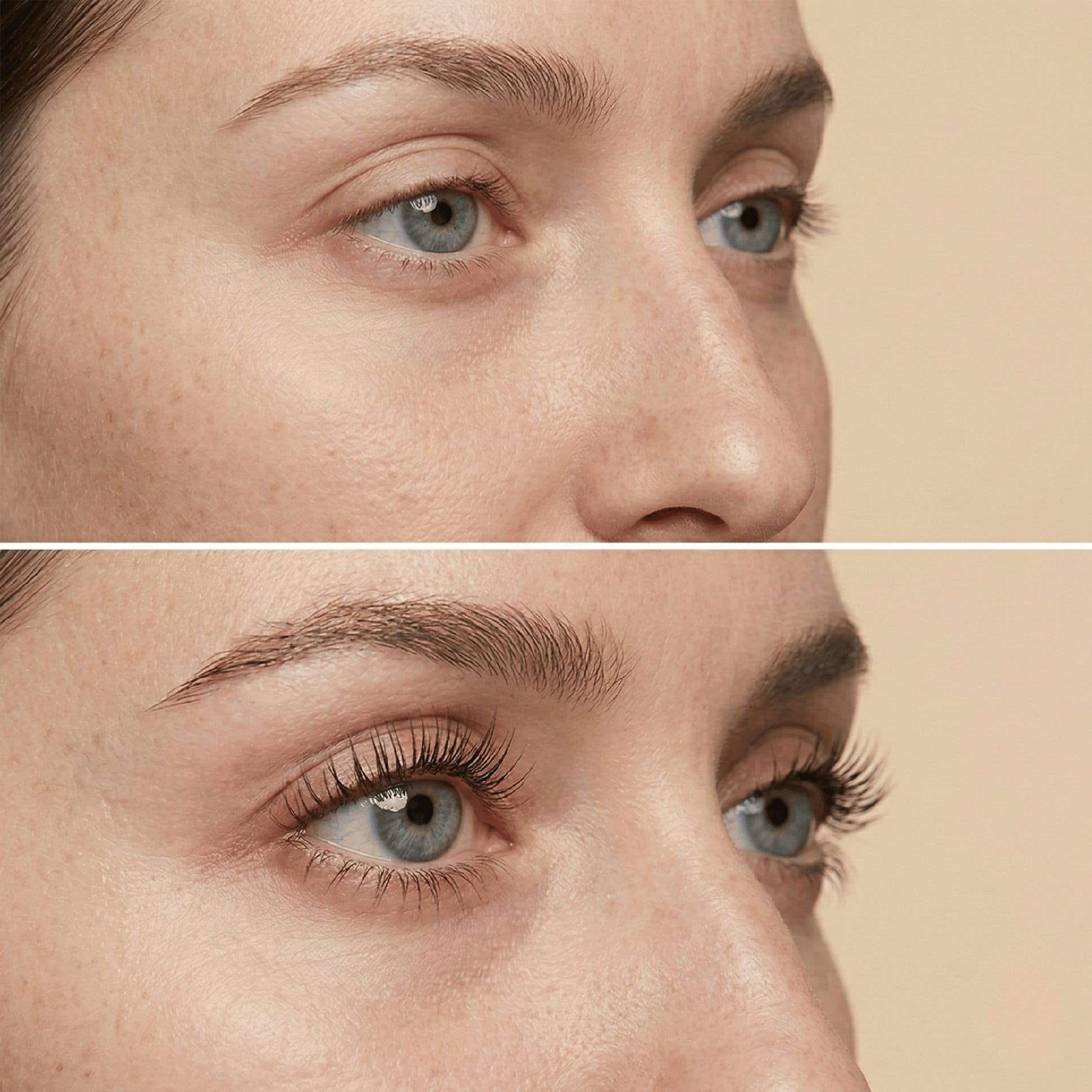
Lash Lift: The Complete Guide for 2026
From step-by-step application protocol to next-generation cysteamine formulas, this guide covers every aspect of lash lifting: technique, safety, aftercare, and 2026 trends. Written for both lash professionals and informed clients.
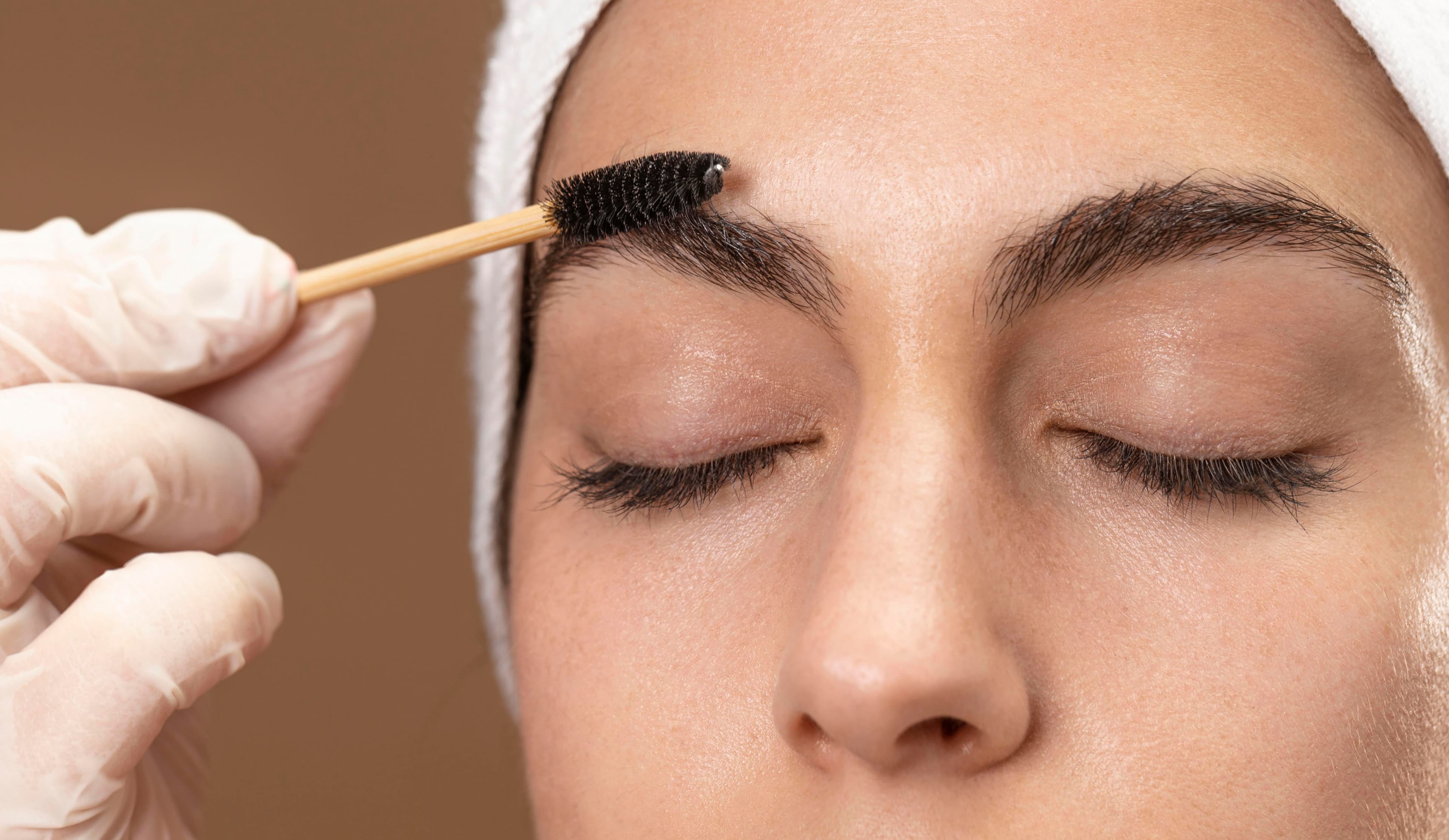
Brow Lamination: The Pro Guide to Fluffy Brows
A complete guide to mastering brow lamination and achieving neat, structured, profitable fluffy brows in a professional salon setting.
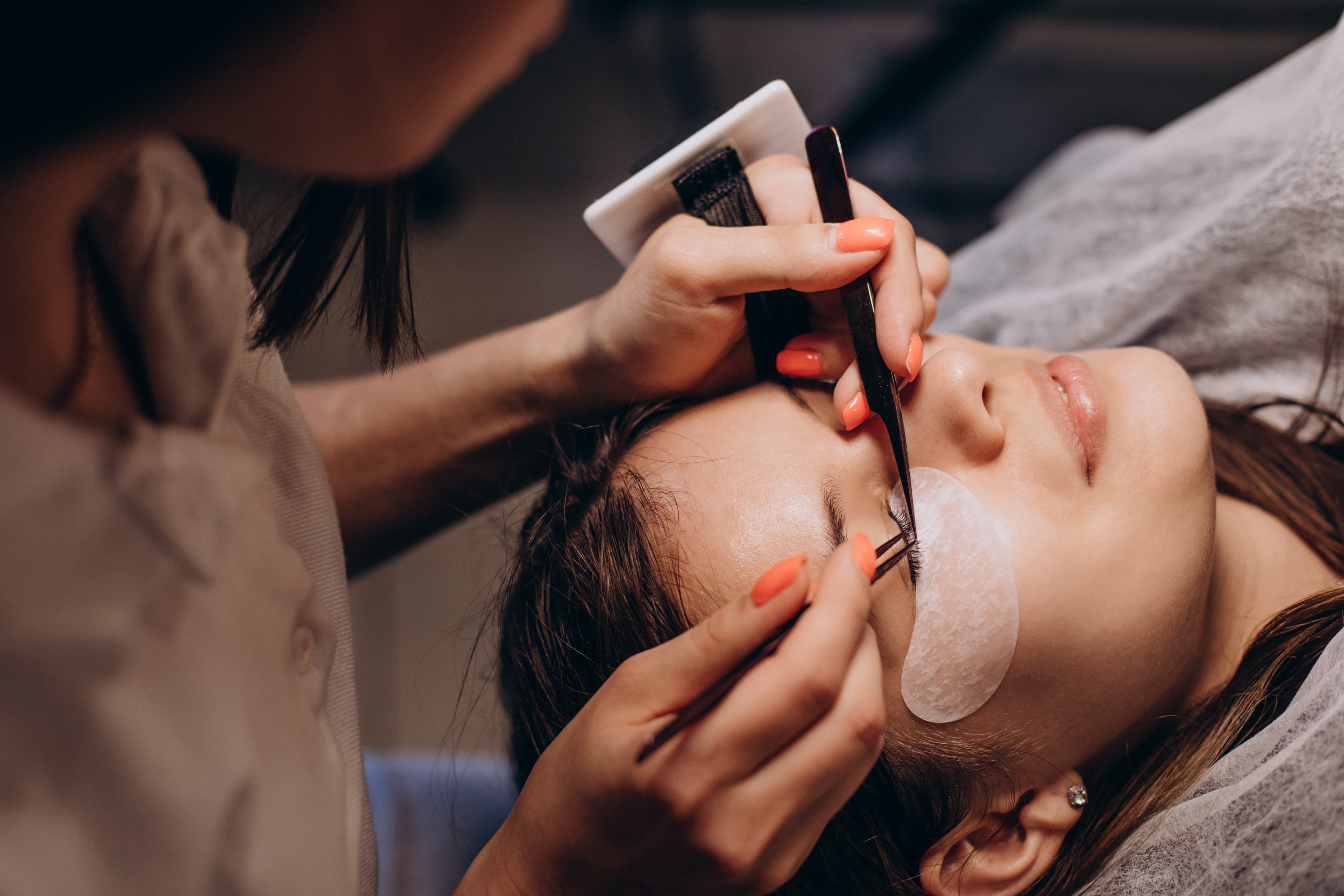
Lash Bar London — Where to Go for the Best Lash Work in 2025
The definitive guide to London's best lash bars in 2025 — what to look for, what to pay, and how to tell technically excellent work from a polished Instagram feed.